

Humidity Carries Smell.
The importance of a solitary excursion.


Sometimes being alone makes the most sense.
There are no distractions, so I can experience with my senses fully. I can really listen to my thoughts and take inventory of my feelings. Each ache in the body is a small blessing, reminding me that I am very much alive. I move in space, holding onto each second, each breath, each step, advancing forward, not worried about destination.
I paid a visit to Great Marsh Wildlife Sanctuary in Barnstable, MA during a visit to the cape on what was a very muggy, sweltering day this week. The dog days are howling right, and now I am eager for the harvest moon. I took a walk on the trails, and began my usual close examinations of the plants and insects and all sorts of stuff, starting with a wildflower patch that was abundant with bee balm, black-eyed Susan, and a flurry of pollinators. I thought to myself: “have I really ever studied the scent of rudbeckia flowers like black-eyed Susan?” I knew I was picking up the peculiar, yet enticing geranium-meets-oregano aroma bee balm quite readily, as I usually do, but I leaned in closer for the yellow starburst flowers that neighbored them, and yes, I remembered black-eyed Sunsan do smell quite pleasant, sweet, spicy, and a little nutty, not terribly different about its cousin in the Asteraceae family, the sunflower. I pondered it for some time, while admiring the frenzied little bees of all sorts that zoomed from flower to flower. One such bee I encountered is the Ligated Furrow Bee (Halictus ligatus), a tiny sweat bee species that has been studied to exchange information on food sources with their nest mates through a unique ‘dance’ similar to honeybees.
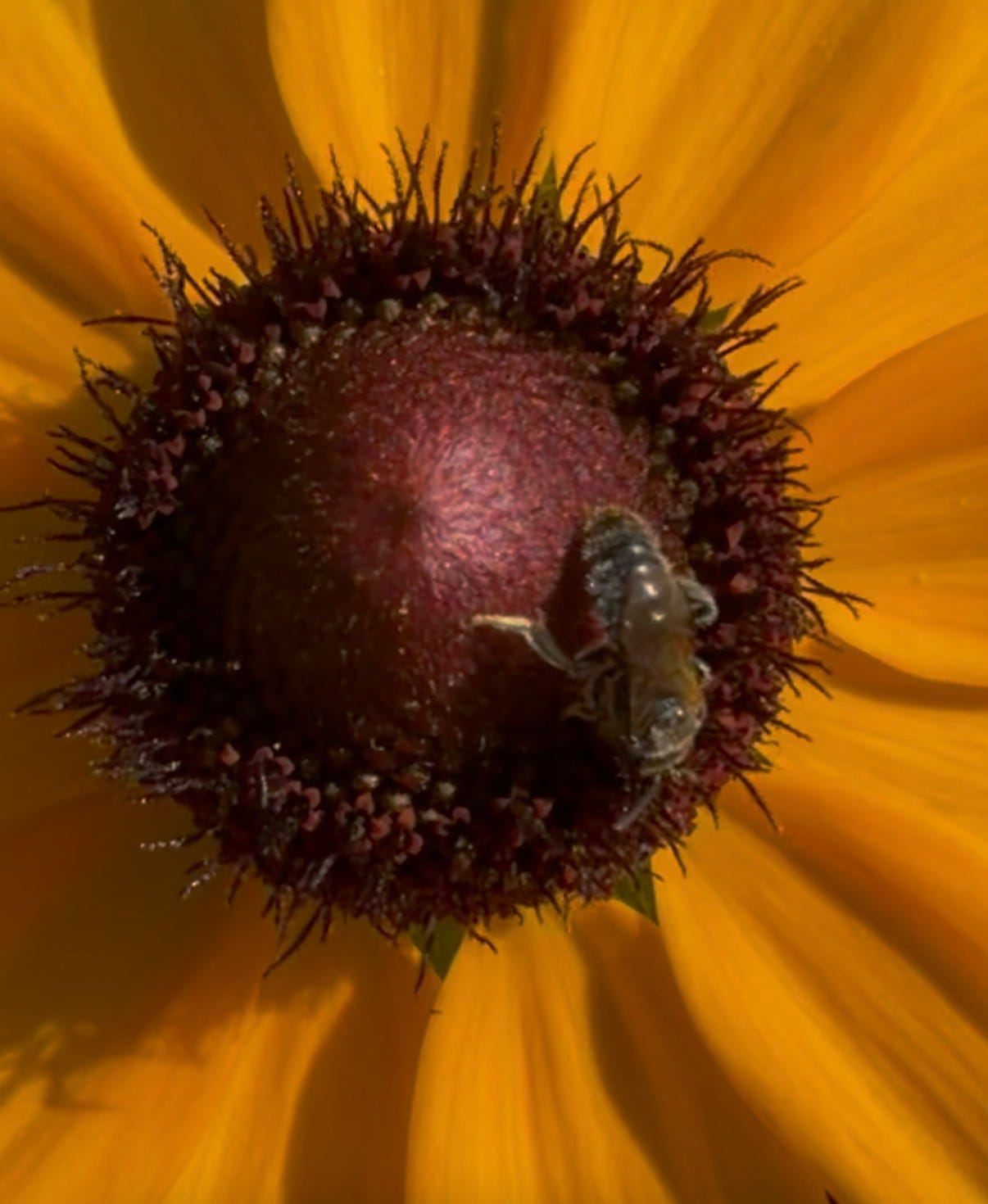
The average person is usually aware of only a handful of bee species: the honeybees, the bumblebees, the carpenter bees (if they are not mistaken for bigger, blacker, less fuzzy bumblebees), and maybe perhaps sweat bees. It turns out that there are over 4,000 species of bee in the United States, which includes the solitary Perdita minima, known as the world’s smallest bee, measuring at only 2mm in length. Our friend the Ligated Furrow Bee has a length measuring of anywhere between 7-10mm, still small enough so that if you blink you may miss it. To watch them foraging intently is to enter their world, which seems dutiful, industrious, single-minded. All pure purpose. It’s funny to behold and then to look back at the human: so messy, complicated, often clumsy, and most of all, deeply, deeply attached. The bondage of our own socially complex brains makes it near impossible to fathom being so blissfully instinctual yet still vivaciously sentient.
As I moved on past this patch of flowers and onto the trail, I noticed how the humid air was carrying all the smells is the most wondrous manner: marsh water, sticky sap from pitch pines, ripe elderberries, even mushrooms fruiting from the understory. I discovered a lone ghost pipe (Monotropa uniflora) standing sentinel, an apparition of the palest pink, almost at full maturity. This distant relative of the blueberry produces no chlorophyll and instead relies on something called myco-heterotrophy. This is where a plant obtains its carbon from root-associated fungi. It just so happens that most orchids are also myco-heterotrophic at some point in their life cycle. The ghost pipe is a 100% mycoheterotroph throughout its life. It’s been one of my favorite plants since I was a young child finding them in the summer in the woods behind my house.
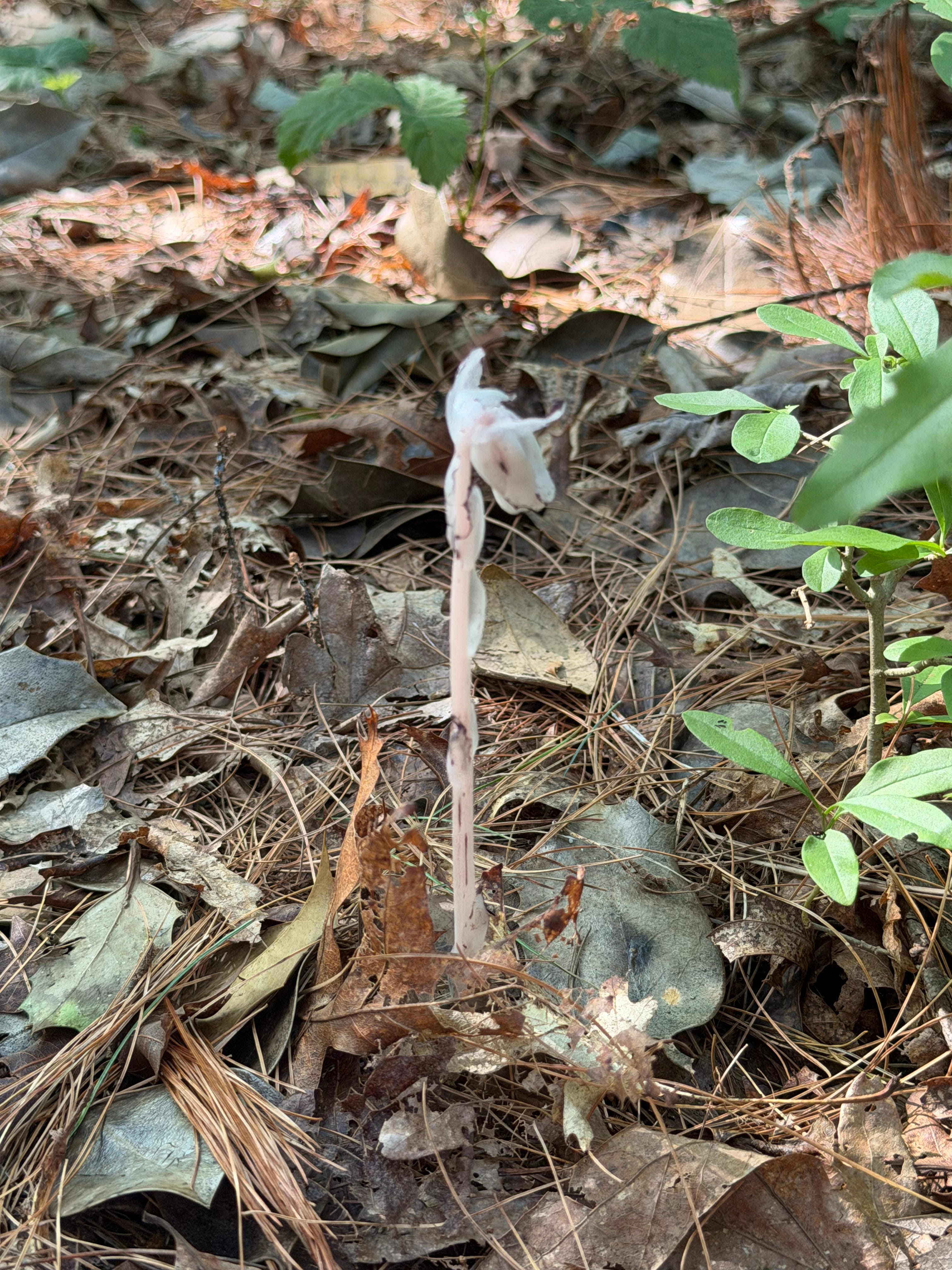
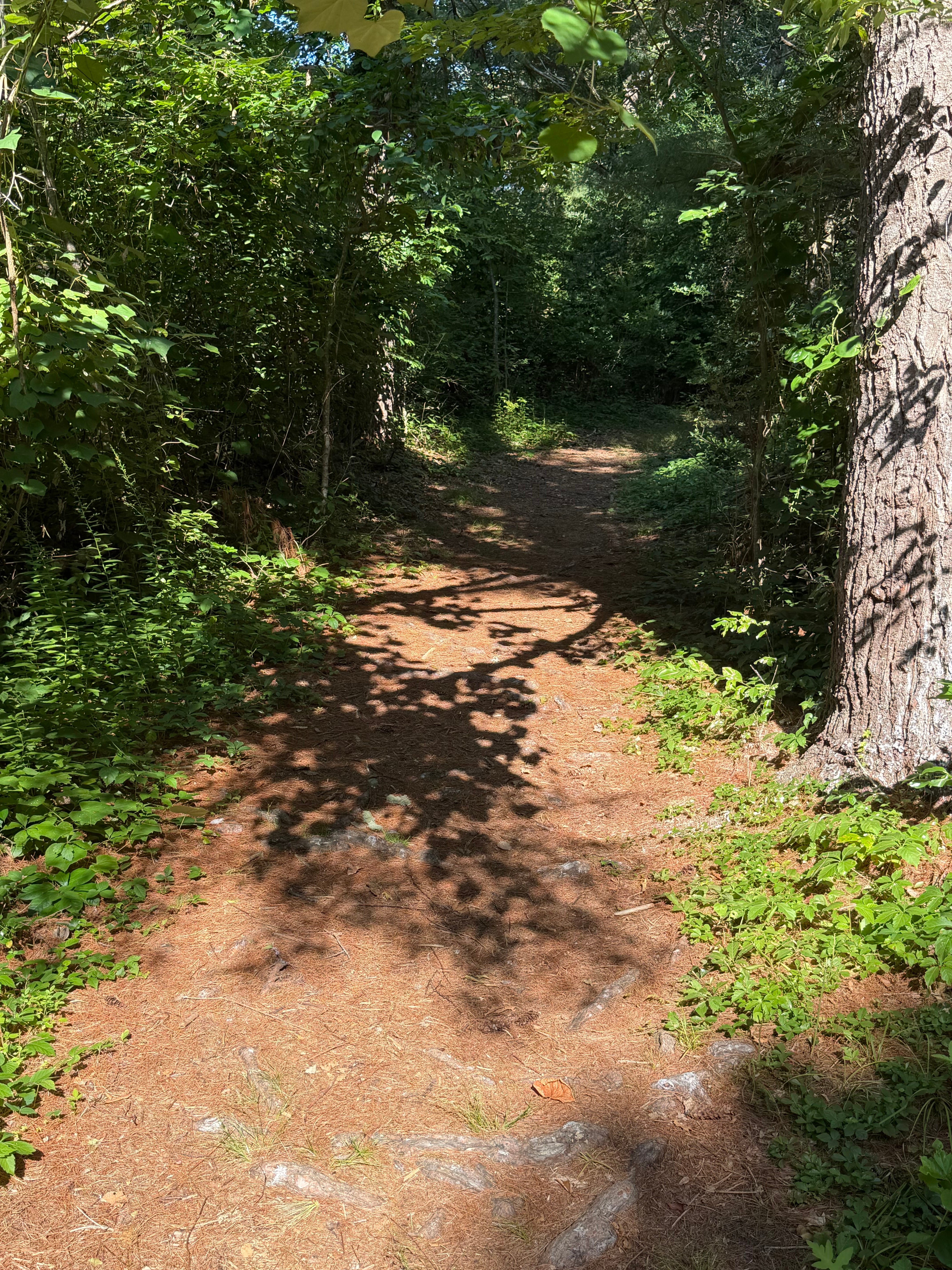
Do they have smell, you might ask? Yes, to a point, mostly earthy, loamy, fungi-like, but that could perhaps just a product of their habitat. There is no discernible scent coming rom the flower itself, unless of course perhaps the bumblebees that visit them can detect something humans cannot. Not far from this ghost pipe was a stretch of the path that I found absolutely mesmerizing. Covered in a carpet of dried pine needles, below a clearing so that the sun could bake them, this patch emanated the most heavenly scent. Warmed ‘pinestraw’ is such a special smell—another one that is a very early memory of mine. It is dry-grassy, hay-like, sappy, mossy, woody. There is also a light, sweet smokiness. Once I had become well-acquainted with vetiver, I realized that some aspects of its scent profile seems shared with dried pine needles as well. I remained in this spot for as long as I could handle the heat of the unrelenting sun.
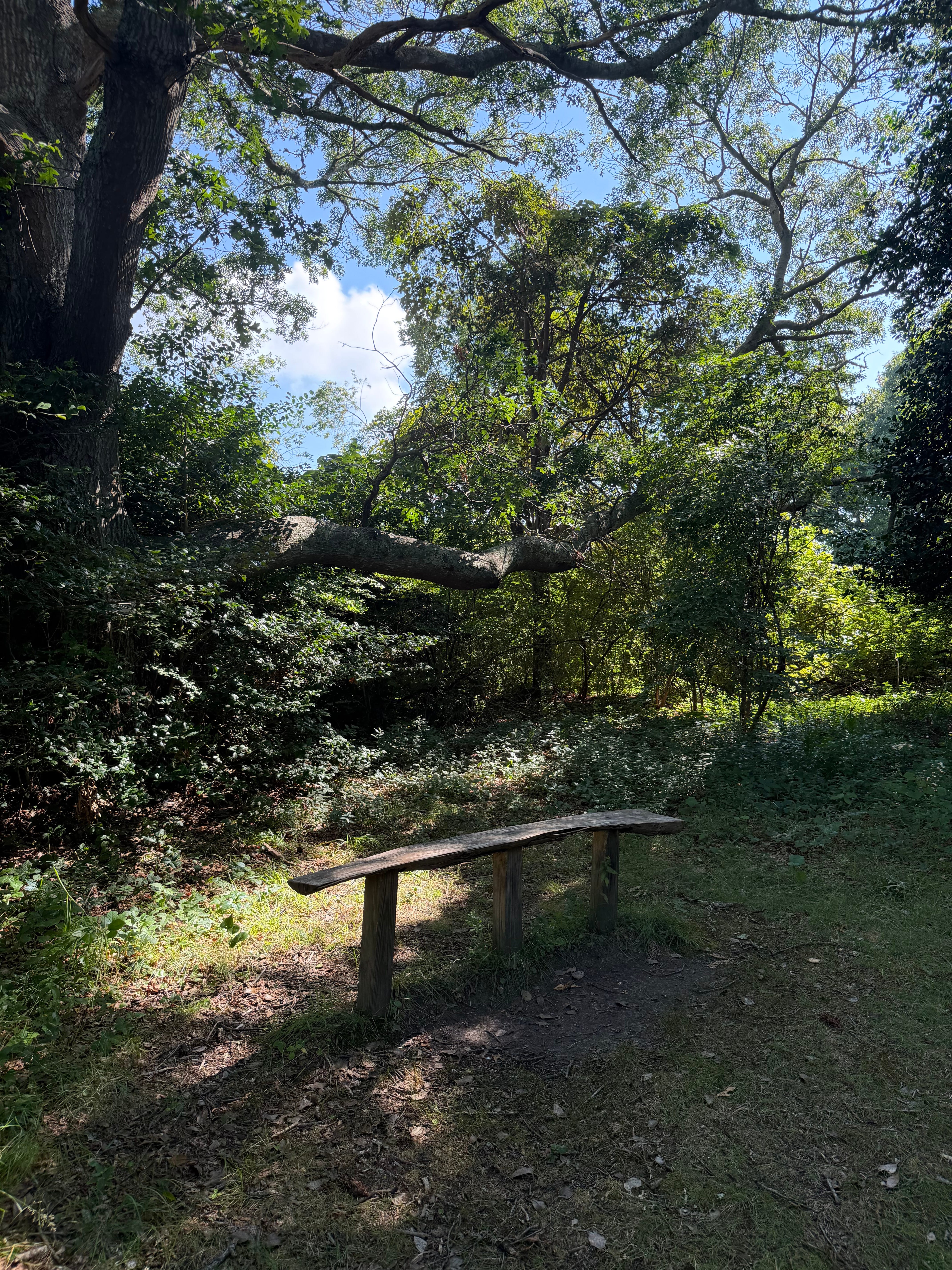
I sought a shadier location too cool off and found an inviting bench. I sat, listened to common yellowthroats from the open marshes nearby, singing “witchety-witchety-witchety.” I also heard black-capped chickadees, cardinals, catbirds, the usual denizens. The wetland smell mingled with that of the brackish waters that open out to Cape Cod Bay.
I continued my walk towards the wetlands and the smells changed to that of the coumarin-rich grasses and the general balm of all the wild herbs and flower that thrived in a meadow. I found some tansy that grew along the path, picked a few leaves and crushed them. The oil expressed from the foliage is camphorous, reminiscent of rosemary and wormwood; so stimulating. I admired the lush, green unruliness of Button Bush Swamp, charmed by its signifying signpost:
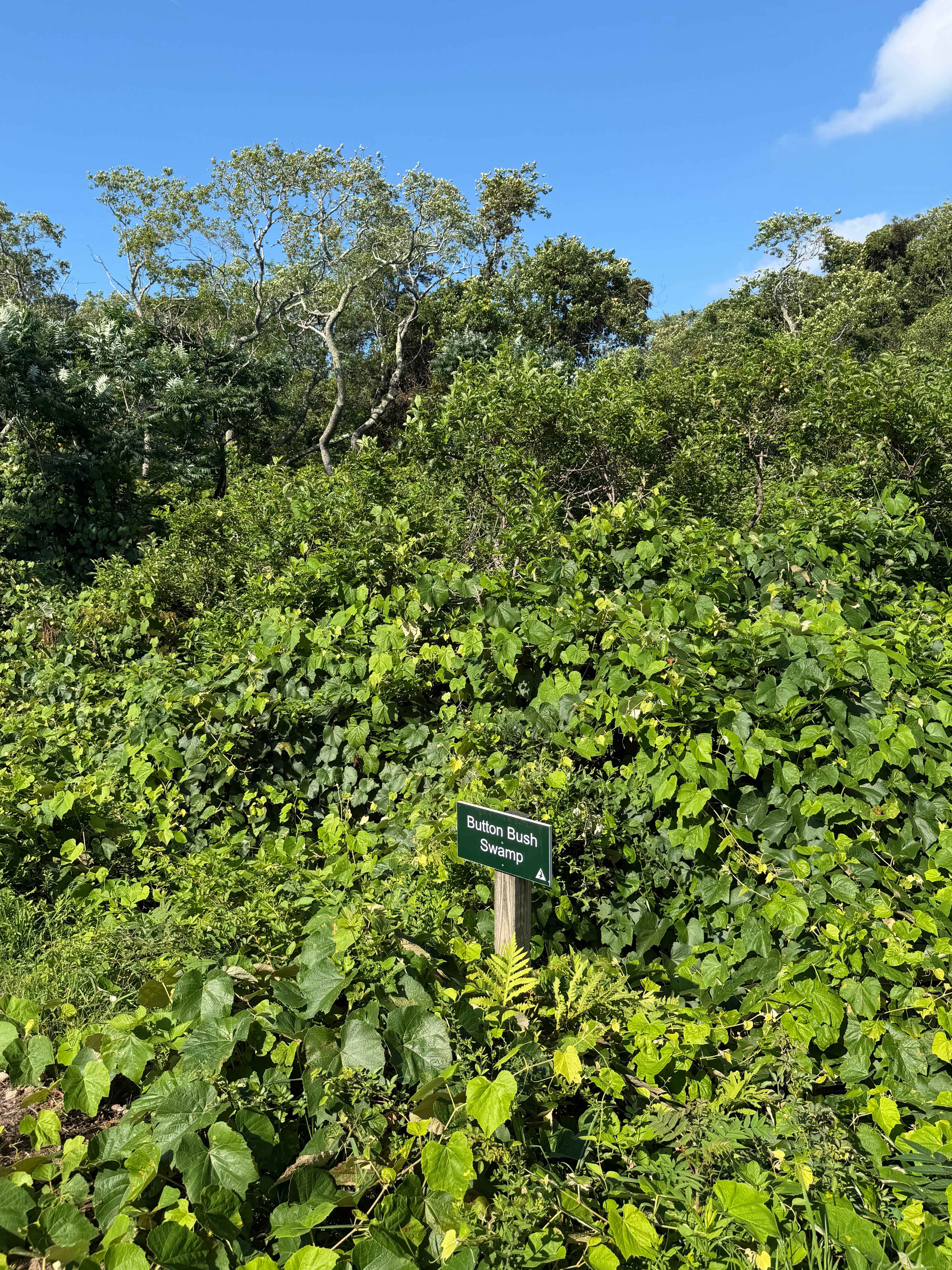
It was then time to head back. It felt like the most important type of therapy, one of much looking, listening, and smelling. Sure, it was quite a hot day, and sweat poured profusely, but it was no less invigorating, and maybe even some toxins were released and even the tiniest new neural pathways were initiated. In embracing my introverted nature with age, I’ve learned to find more value in solitude, as a form of recuperation, a means of coming home to oneself, and to face another day anew.
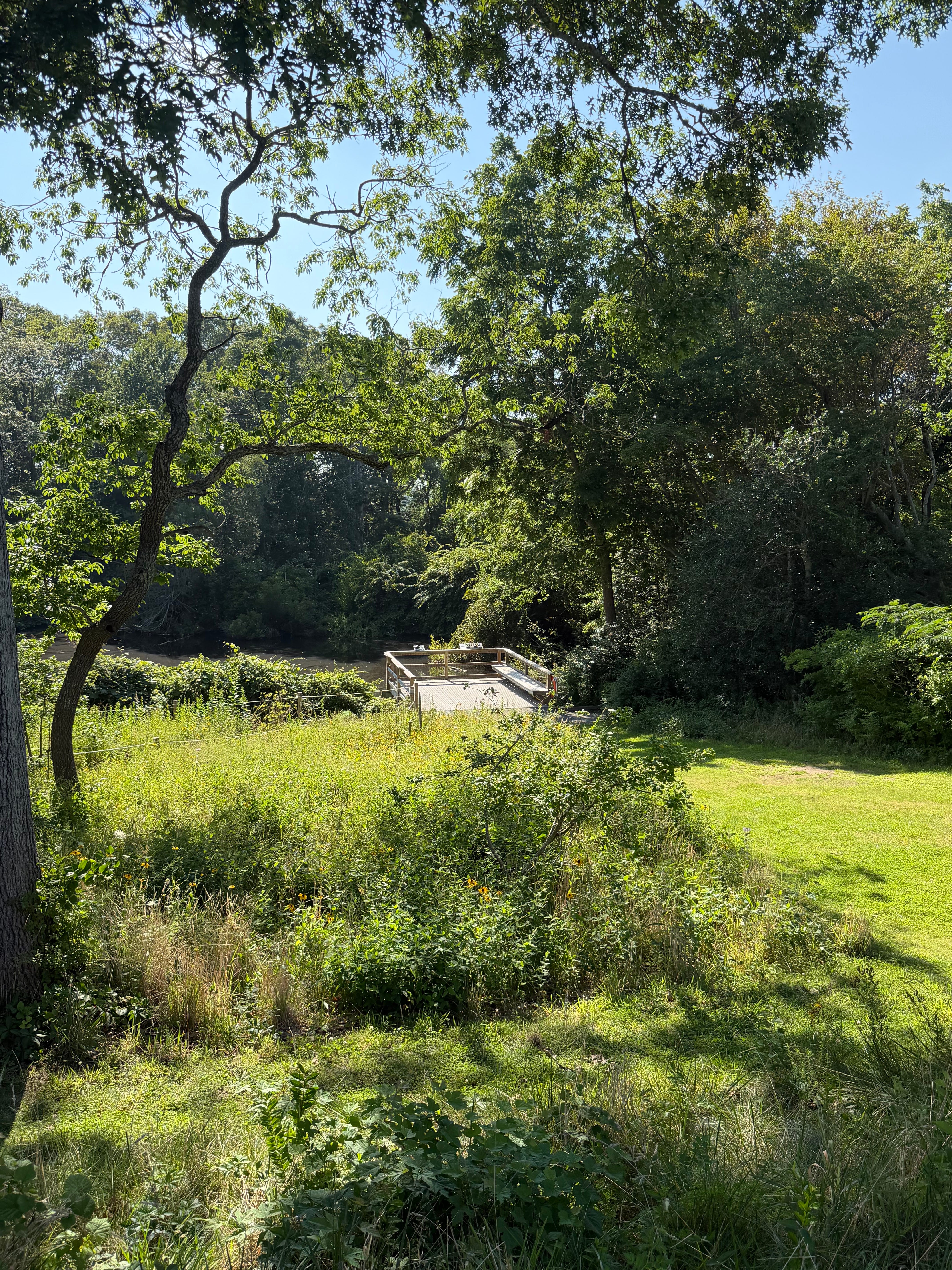
Until next time.
This is totally a forest bathing experience for you! Thank you for taking us all on the ride :) I love your nature talks - I’m always so impressed by how much you know about the natural world and how more enriching it is for me to be out there post your knowledge drop
I was thinking recently about how we used to listen to music. We’d just sit down and listen. Or get up and dance. I definitely did that. And now music always has to accompany something else -- a drive, a walk, a workout, work, god knows what else. It’s become functional, something playing alongside another activity. Because there’s never enough time for anything.
It feels almost too luxurious now to just sit down and listen. Or to just go for a walk. Actual luxury. I felt a little sad reading your piece, because somehow these incredibly simple things have turned into luxuries for us.