

Under the Linden Trees
Awareness of Plants and Smelling the Flowers.

Sometimes I wonder if wholeheartedly enjoying the smell of the flowers around is something that can be taught, or if it’s just in one’s blood. Perhaps some of us are raised in families that appreciate subtler forms of recreation or maybe a parent took the time to share the such natural wonders with a young child and that’s where it takes off, with a lifetime ahead of intentionally experiencing one’s sensory environment. I was privileged to have lilies of the valley in the backyard of my childhood home and I distinctly remember, not even four years old, having my mother teach me what they are and having me smell them. This is one of my earliest scent memories, and probably the reason why I have a decent assortment of muguet perfumes in my collection. Throughout my life, with varying levels of confidence depending on my age, I’ve been willing to lean in to smell flowers. I was a bit more private about it during more impressionable times of adolescence and young adulthood, having been made to feel as though its a rather peculiar thing to do unless there is obvious bouquet on display. But I would still sneak in a sniff of a magnolia on a tree in a public garden here crouch down to discreetly smell a poet’s narcissus.
Now that I am entering my late 40s, I have absolutely zero self-consciousness about it. As a matter of fact, I’ve grown to be proud of it. Recently, I leaned over to experience a peony along the sidewalk in a garden and a man, around my own age, walking from the opposite direction, asked “smell good?” smiling and seeming genuinely interested. “Not bad, but they are past peak now and their scent is waning,” I replied. No suspicion or befuddlement on his part. The acknowledgement made my day, actually. It seemed to be regarded as normal behavior, as it should be. Then I think about when something like this was commonplace behavior, even a pastime, long before the age of smartphones, television, even, think the nineteenth century, a time where boredom led us to be so creative and curious, filling spaces between toiling and chores to really sink into something that was called leisure. This leisure would be spent not only reading a book in a courtyard or enjoying a stroll like a flâneur or flâneuse, but by—you guessed it—smelling flowers.
Among the many Victorian painted depictions of subjects stopping to smell the flowers and the florid (!) poetry that frequently referenced the sweetness of jasmine, roses, and all sorts of nosegays and so forth. More gardens were tended to, therefore, the masses tended to spend more with plants, including the pleasant-smelling ones. Throughout so many cultures over vast expenses, these flora were a source of myth, spiritual significance, medicine, and profound symbolism. In our modern age, we have grown so detached with plants that there is even a term for it that I referenced in a past article: “plant blindness.” Originally coined by Elizabeth Schussler, of the Ruth Patrick Science Educator Center in Aiken, South Carolina, and James Wandersee, of Louisiana State University in Baton Rouge a couple of decades, this lack of plant awareness plagues society. Many are entirely aware of the importance of plants in our ecology and in the every day matters of human beings. We simply have people going about their lives not knowing much about these organisms that surround us everywhere. I remember quizzing an old roommate some time ago on all the many flowers surrounding us. It was springtime, so there were many from which to choose. “What’s that?” (pointing to a tulip). “I am not sure.” “Ok, how about this one?” (leading him to a bush of azaleas). “I have no idea.” “Surely you know this one here!” (reaching for some daffodils). “I don’t know!” I was gobsmacked; these are common flowers that bloom everywhere, in gardens and yards through neighborhoods here in the northeast US. But then I realized I took for granted that perhaps I really am more the exception than the rule.
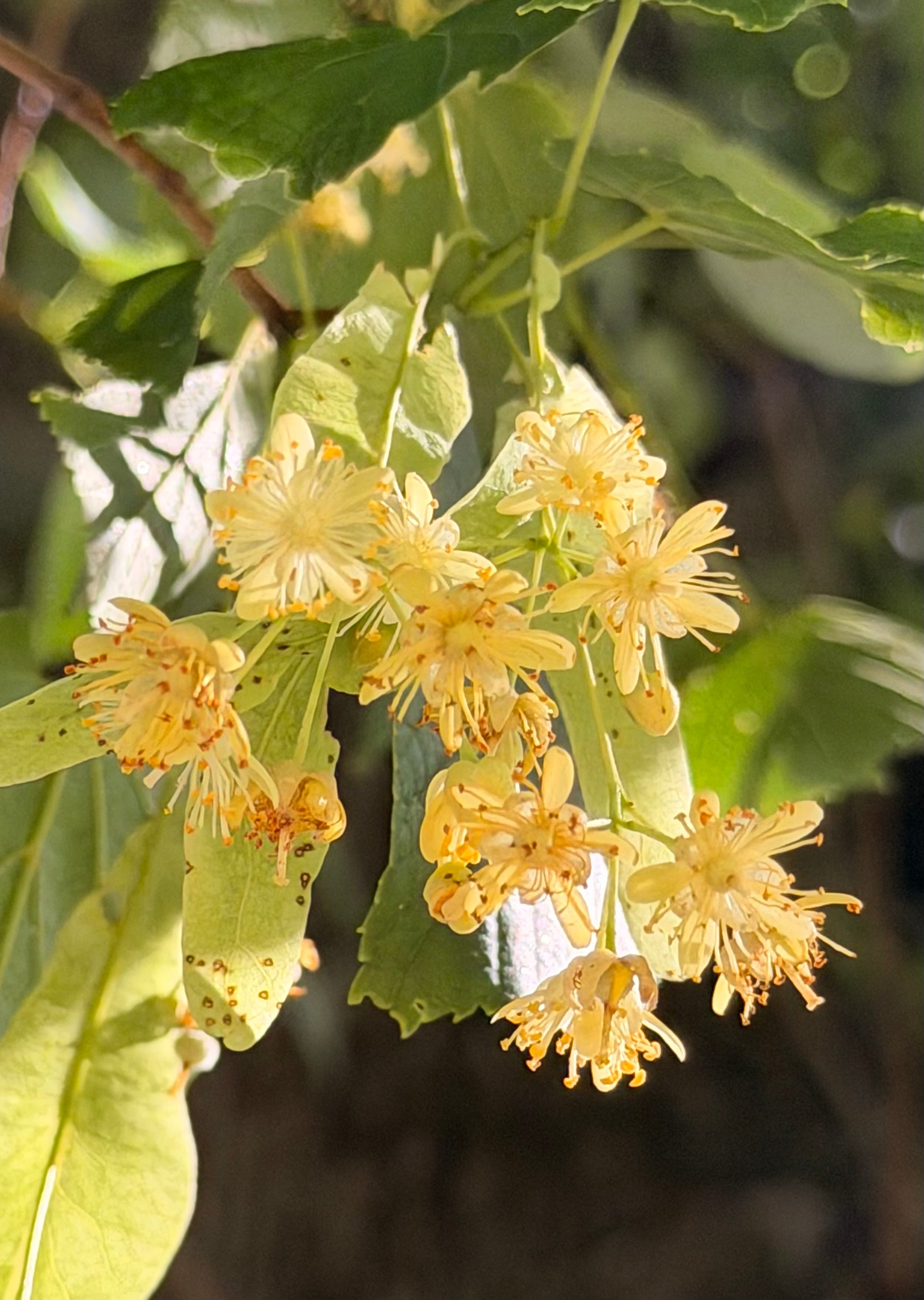
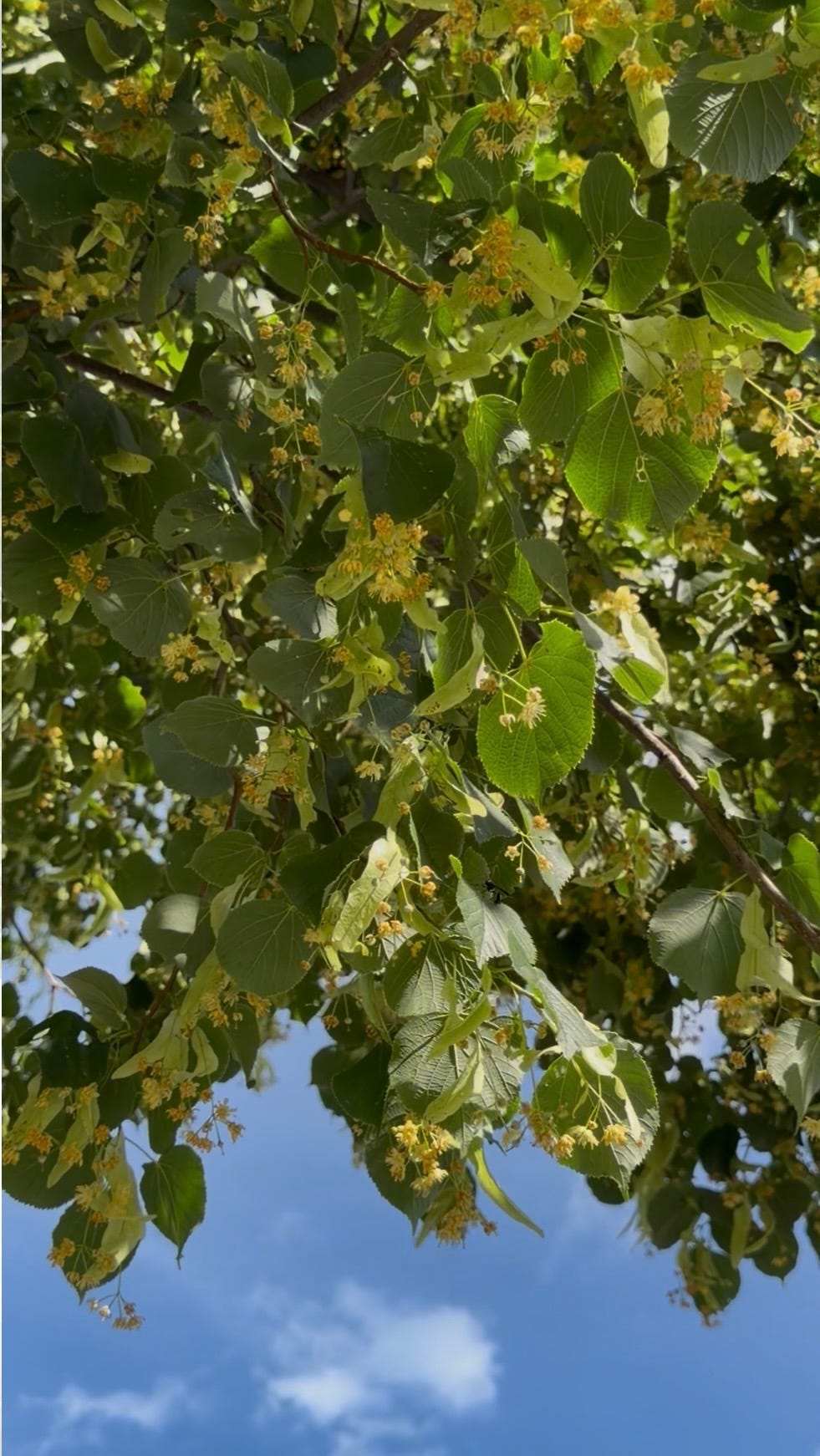
Which leads me to the quality time spent on a street lined with linden trees this weekend. The perfume of linden blossoms blooming in late June here in Massachusetts is something I anticipate each year. It is, without exaggeration, one of my all-time favorite scents. I even often purchase linden-scented soap and do have a group of linden fragrances that I will be sharing on Instagram later this week. I am quite fortunate, because the trees are common ornamentals everywhere here, either Tilia americana, commonly known as basswood or American Linden, or Tilia cordata, the Littleleaf Linden. It was the latter that I found planted in a row along this street in Weston, MA, and their balm was rapturous to me. I realized that this leisure, this “nothing in particular” that I partook on this sunny afternoon, really does speak for something. Passers-by look with curiosity and bemusement, as they are on their run or are taking their kids for a walk. “What exactly is he doing?” I thought to myself whether they knew that this heavenly aroma was being emitted by these tiny, unassuming, yet charming little green-yellow blooms on these trees? Did they notice the scent at all, and if so did they appreciate it? I spent a good while under their boughs as a steady breeze swayed these flower clusters and bees foraged for their nectar, which just so happens to make a delectable honey. There is only a brief window to enjoy them—maybe two weeks or so, so I wanted to relish every moment with their heady, honeyed, powdery-green fragrance.
It inspired me to look into how their perfume has been enjoyed over time. I realize that this may involve more research than simply using search engines online, perhaps a long overdue visit to a library. In the meantime, I was reminded of the teas and tinctures infused with these flowers and their medicinal value in soothing anxiety, easing cold, reducing join pain, supporting sleep, as a carminative, and so forth, which is all fine and good, but I wanted to find possible poetry and prose on their scent. I really couldn’t find anything after all, but I just know its out there. Or maybe I am the one to write a poem about it, over a cup of linden tea no less. This is where all seems to come full circle, where I feel a duty to dedicate a poem to this flower, or at least refer to it in one. I suppose the point I really want to make here is that I hope that, if nothing else, my rendezvous with these linden trees this week encourages any of you who read this to take some time out to appreciate these wondrous, ephemeral moments with plants. Allow them to summon sensations inside you, unearth deep memories, let their scent and their beauty make you feel grateful to be alive on this floating blue marble teeming with miraculous organisms. Life needn’t be always about something with purpose. Our culture of optimization and screen-time is sapping away those moments to simply be languid, to reflect on beauty. That’s it. Beauty. Why be perpetually arrested by the ugliness of humanity until it makes our heads spin when there is so much beauty to behold. It’s okay to let beauty take over.
Smelling flowers. Maybe it is something that can be taught, or learned, and that we all have the potential to take notice and find such rich meaning in its practice.
I’m also a fellow linden lover! I like how a row of mature trees will scent the air for blocks. I like this dispersed scent rather than the intense nose to bloom scent. It’s such a wonderful 2 weeks.
You’re very right about a general lack of identification skills for trees, plants, and flowers. I hope this changes. I’m definitely no expert, but I’m at least curious.
I'm the woman going on her hands and knees having a sniff at anything that blooms in the neighborhood's lush front yard. Carnations, recently... I miss the tilleul explosition in Paris so much, though!